


Where multi-branch inventory tends to break down
A typical Philippine SME’s stock moves through several hands before it reaches a customer: it arrives from a supplier, sits in a central warehouse, gets allocated to branches, is picked and packed, delivered, received at the storefront, sold, and eventually reordered. Ninja Van’s description of end-to-end logistics frames the goal simply: the right products need to reach the right stores at the right time.
That flow has a lot of places to go wrong. Retailers running multiple branches often deal with limited visibility into what each location actually has on hand, which leads to stockouts in one branch while another sits on excess stock. Where stock requests still move through spreadsheets and group chats, replenishment slows down and transfers lose their paper trail. Connectivity gaps, older point-of-sale systems, and inconsistent product codes across branches add further friction to keeping records in sync.

The result, in a lot of cases, is money tied up in the wrong place: fast-moving items running out while slow-moving stock sits idle and ties up cash that could go toward reordering. Traffic, limited urban storage, and demand swings tied to weather or pay cycles make replenishment planning harder still.
None of this is unique to one industry. Retail chains, manufacturers, food and beverage distributors, and government offices all manage stock across multiple sites, and the operational headaches look similar across the board. The rest of this guide sets out the specific criteria worth checking before picking a system to fix them.
Eight criteria to check before you sign anything
Real-time inventory valuation. Stock value should update as items move, not after a month-end recalculation. Without it, financial reports lag behind what’s actually on the shelf, which makes margin decisions and reorder budgets guesswork.
Multi-location and warehouse visibility. A consolidated view across warehouses, stores, and stockrooms, with inter-location transfers logged, is what prevents one branch from running dry while another sits on excess stock.
Barcode-enabled receiving and delivery. Scan-based workflows covering receiving, put-away, picking, packing, and dispatch cut down manual entry errors at each handoff, which matters most for businesses moving goods from a central warehouse to several storefronts daily.
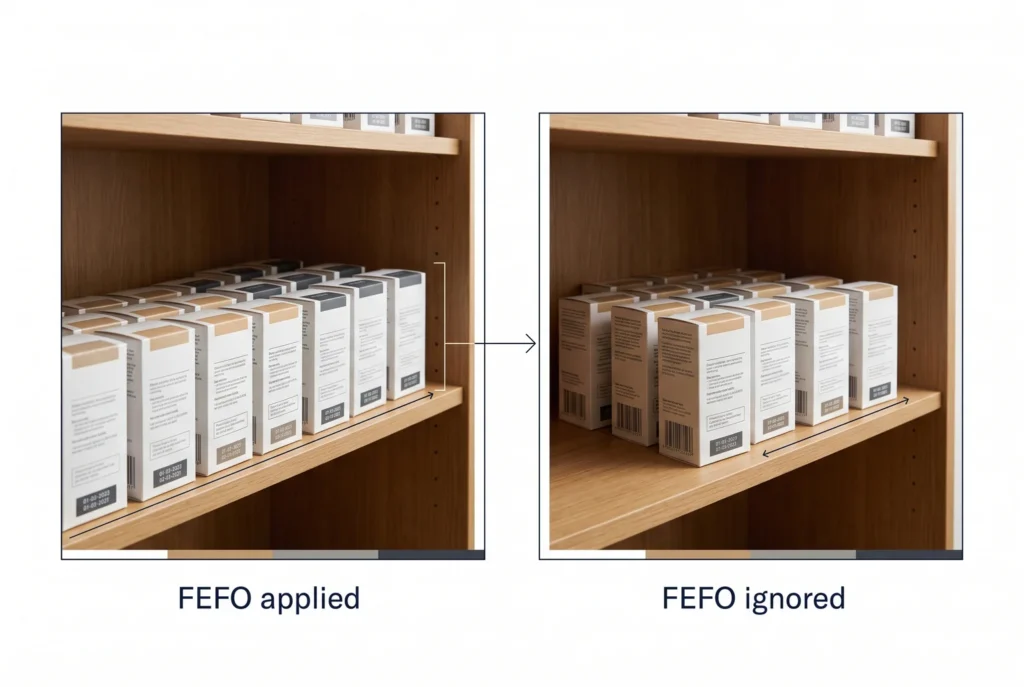
Tracking of damaged, spoiled, or expired goods. Lot and expiry capture, FEFO-based picking, quarantine workflows, and reason-coded adjustments give a paper trail for write-offs, which is core to managing perishable or dated stock. This matters for food and beverage distributors and any retailer carrying dated goods.
Supplier price management. Purchase orders, vendor records, lead times, and pricing history should live in the same system, so procurement decisions aren’t scattered across supplier emails and spreadsheets.
Pilferage elimination. Access controls, user-specific logs, segregation of duties, and approval thresholds for adjustments create a record of who changed what and when, narrowing the window for unexplained losses.
SKU-level stock thresholds. Reorder points and safety stock set per SKU and per location, paired with automated low-stock alerts, keep replenishment tied to actual demand rather than a manager’s memory.
Stock accuracy controls. Cycle counts, physical counts, discrepancy reporting, and timestamped audit trails tied to individual users make variances traceable instead of mysterious.
Every criterion here is table stakes for a serious platform. How well a vendor executes on each one is where the real differences show up.
Turning the checklist into a demo script
Treat these eight criteria as questions you make vendors answer with a screen, not a slide deck. Ask to run a cycle count in one warehouse while another keeps operating, and watch what happens on the actual handheld the picker would use, not a polished presentation view. Request the full audit trail for one SKU, then a variance report after a mock stock take, and ask who sees that report and how a recount gets triggered. When a vendor says “yes, we integrate,” push further into how data actually syncs with your POS or accounting system, and whether that logic is native, configurable, or something they would need to build.
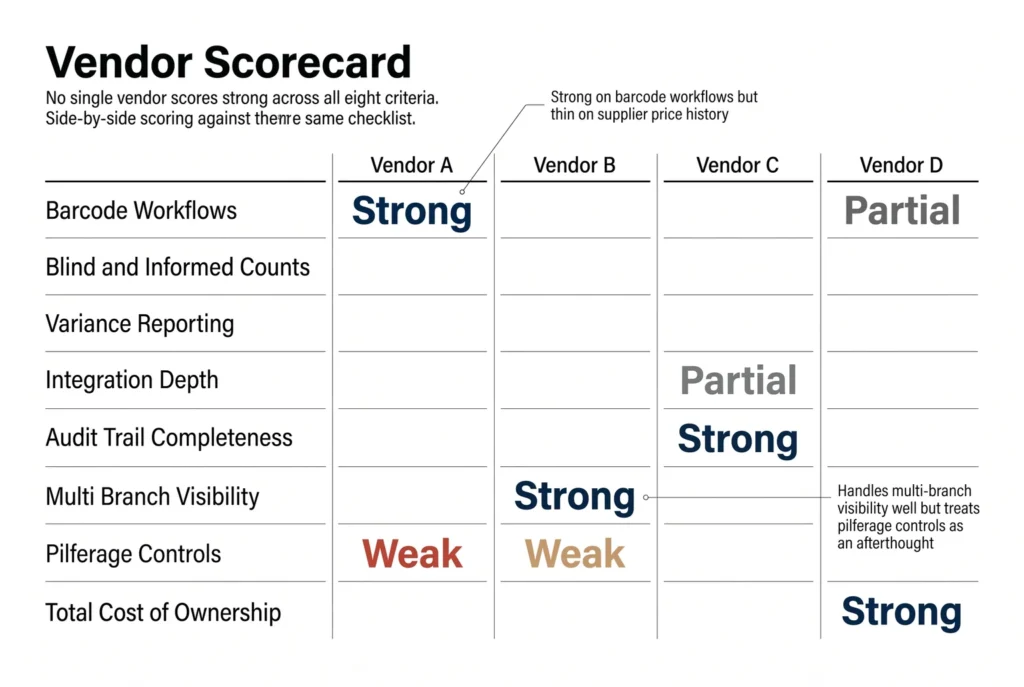
No single vendor in the Philippine market will ace every criterion out of the box. Some are strong on barcode workflows but thin on supplier price history. Others handle multi-branch visibility well but treat pilferage controls as an afterthought. Scoring each vendor against the same eight items, side by side, is what makes the comparison useful.
Where QAlpha’s Inventory, Purchasing and Sales System lines up with the checklist
Running the eight criteria against Quadrant Alpha’s platform is a useful exercise because it shows where the fit is strong and where a buyer should still ask follow-up questions.
Multi-location visibility. The system centralizes stock data across multiple warehouses and locations, which matters for chains splitting inventory between a central warehouse and several storefronts.
Barcode-enabled receiving and delivery. Barcode scanning is built into the inventory and warehouse workflows, covering item identification and stock movement from receiving through dispatch.
Damaged, spoiled, or expired goods. Quadrant Alpha ties barcode tracking to damaged-goods tracking and pilferage reduction, though buyers running perishables should confirm whether FEFO-based picking is configured out of the box or needs setup.
Supplier price management. The Purchasing Management System tracks purchasing costs, receipts, and supplier records, and connects to accounts payable, giving a working history of what each supplier has charged over time.
Pilferage elimination. The same barcode and warehouse controls that catch damage also support pilferage detection, since every movement is logged against a specific SKU and location rather than left to manual tallies.
SKU-level stock thresholds. Reorder management and alerts are part of the feature set, based on third-party listings of the platform’s alerts, forecasting, and reorder tools.
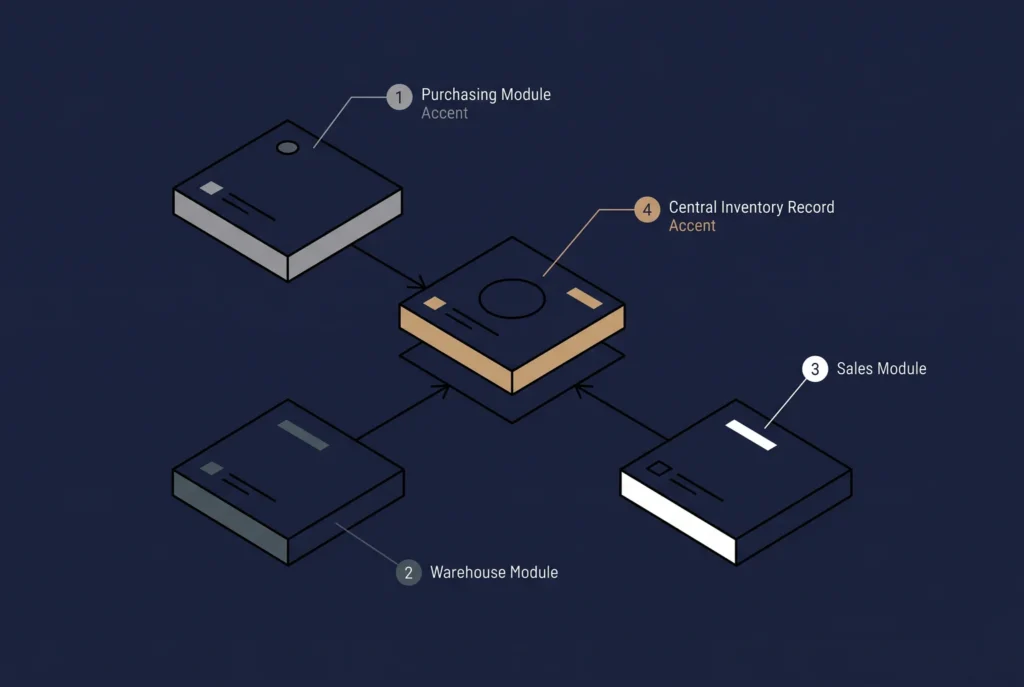
Stock accuracy. Because purchasing, warehouse, and sales sit on one platform rather than three disconnected tools, discrepancies between what was ordered, received, and sold are easier to trace to a single record.
Real-time inventory valuation. This is the one area to press vendors on. QAlpha’s materials confirm cost and receipt tracking through purchasing, but don’t spell out which costing method (FIFO, moving average) drives valuation, so buyers who need that specificity should ask directly during a demo.
No platform, QAlpha included, should be taken at face value on paper. The value of this mapping is in knowing exactly which questions to ask next.
What one client says about running QAlpha day to day
A major Philippine logistics provider has been running Quadrant Alpha’s Sales and Inventory System, and the feedback centers on a problem most PH operators recognize: manual processes that used to slow down receiving, counting, and reconciliation.
The client described the shift plainly:
“The system automated our manual processes and gave us faster turnaround, and it was easy for our staff to learn as we expanded.”
They also pointed to the working relationship, noting good client service and fast responses to concerns.
This kind of feedback speaks more directly to usability and support than to hard shrinkage or accuracy numbers. Buyers evaluating tools against stock accuracy and pilferage criteria should still ask a vendor for the specific figures, cycle count variance, shrinkage rate, discrepancy resolution time, tied to their own SKU data rather than relying on a single testimonial.

What else shapes the decision besides features
A feature checklist gets a business most of the way there, but a handful of practical questions decide whether the rollout actually works.
Implementation and support matter as much as the software itself. Ask any vendor for a realistic onboarding timeline, whether migrating data from your old spreadsheets or legacy system is included, and what the first-year cost looks like once setup fees and integration work are added in. Training and day-to-day usability affect adoption directly. Staff who find the interface confusing will keep reverting to manual workarounds, no matter how capable the system is on paper.
Scalability is worth planning for beyond current needs. Some entry-level plans cap monthly orders at 500 to 1,000, which a growing multi-branch retailer can hit faster than expected. Review plan limits against at least two years of projected growth, not just today’s volume.
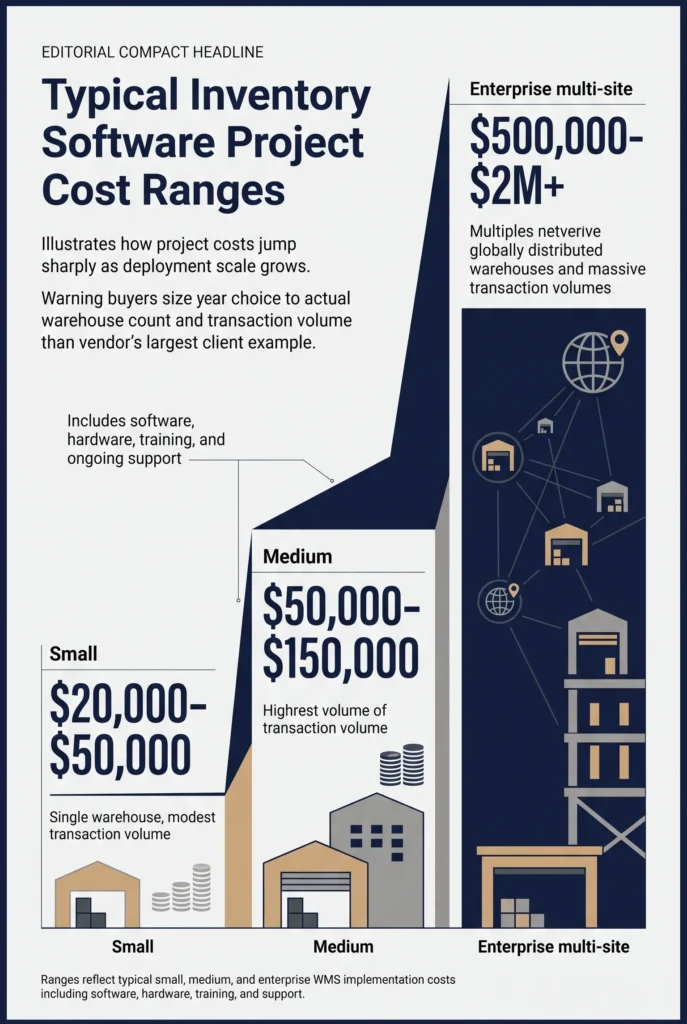
On cost, look past the monthly subscription fee. Total cost of ownership includes setup, integration, add-ons, and usage-based charges, and warehouse-scale projects can range widely, from small deployments in the tens of thousands of dollars to enterprise multi-site rollouts well into seven figures. Weigh that against your actual warehouse count and transaction volume, not the vendor’s biggest client story.
Test the checklist against your own stock data
The eight criteria in this guide work as a scorecard for any vendor, not just Quadrant Alpha. Bring your own SKU list, your worst stockout story, and your current shrinkage numbers to whichever demo you book, and judge the answers against your operations, not a generic sales pitch.
If you want to see how QAlpha’s Inventory Management System handles multi-branch visibility, barcode receiving, and real-time valuation with your own data, book a demo or reach the team at [email protected].