


Why supply chain delays keep compounding in the Philippines
Retailers, manufacturers, F&B distributors, and government suppliers in the Philippines often run procurement, warehousing, and delivery as three separate operations instead of one connected process. A purchasing team places an order without a clear view of warehouse capacity. A warehouse team receives stock without knowing when the next delivery run is scheduled. A transport team dispatches trucks without real-time visibility into what has actually arrived or shipped out.
This kind of disconnect is not unique to any one sector. A 2017 assessment of the Department of Health’s warehouse operations found that program teams and warehouse teams did not coordinate on procurement planning or allocation, and that procurement plans and physical inventory counts were not shared or used for decisions, according to a report from Management Sciences for Health. The same report describes a third-party logistics provider that regularly missed its quarterly delivery schedule, and document preparation for deliveries to more than 2,000 rural health units that took two to three months to complete.
Infrastructure adds another layer of friction. During a truck ban tied to Manila port congestion, the Philippine Institute for Development Studies estimated the economic cost at PhP 43.85 billion over seven months. In early July 2024, vessels waiting at Manila port averaged 2.5 days, with berthing delays of two to three days at MICT.
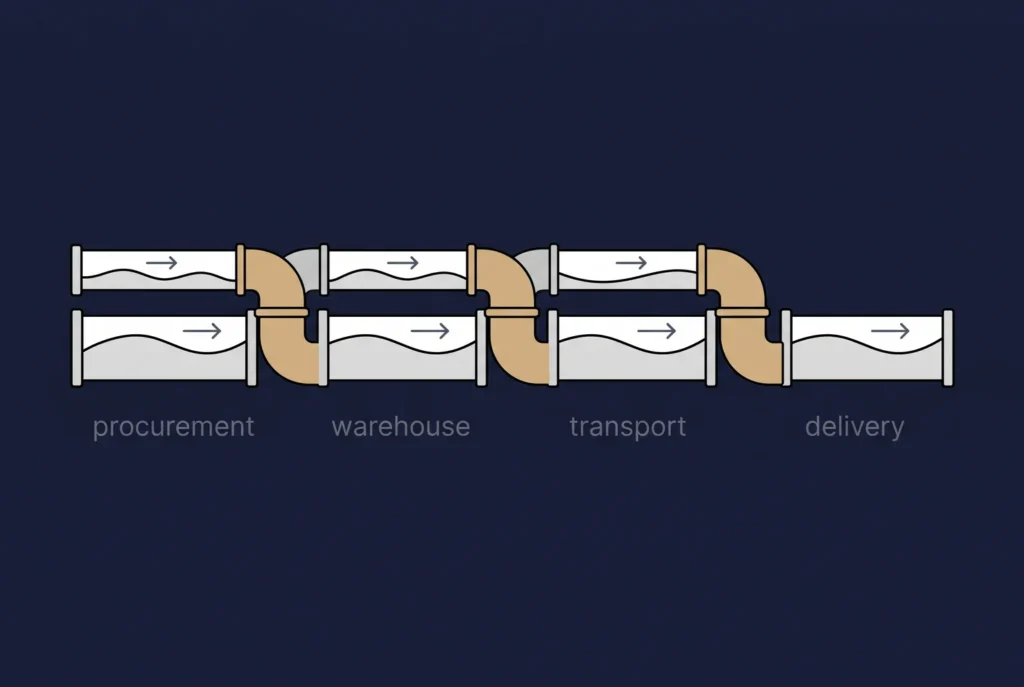
None of these are isolated problems. They are symptoms of the same root issue: procurement, warehousing, and transport running on separate information, with no shared view of what is ordered, stored, or in transit.
Five points where PH logistics chains actually fail
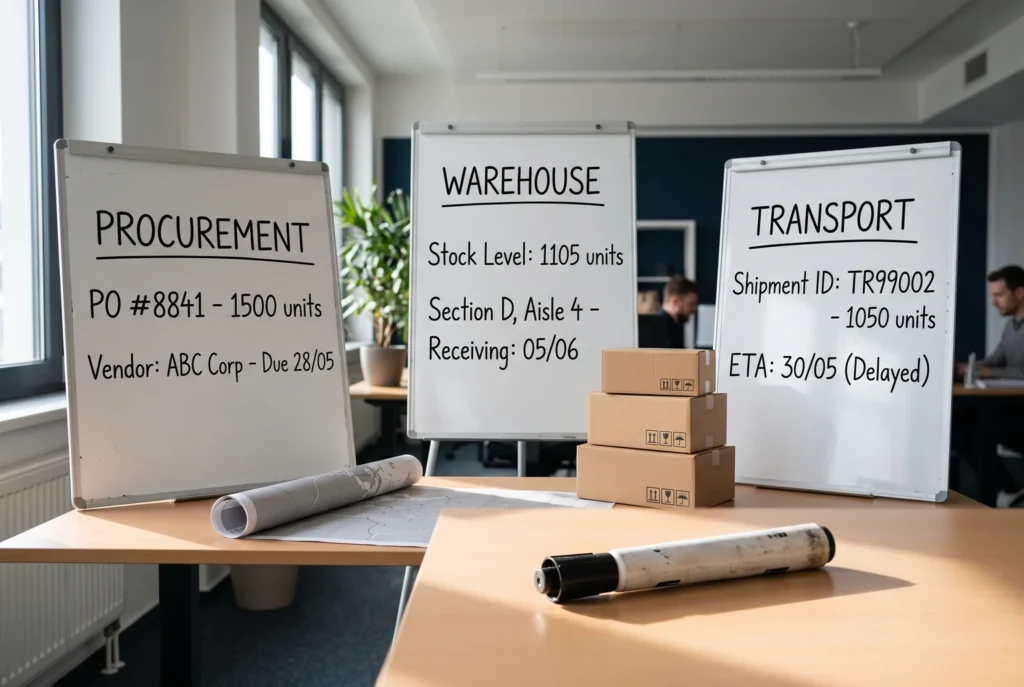
The breakdown rarely happens in one place. It happens in sequence, at the handoffs where one team stops owning the information and another team hasn’t picked it up yet.
Procurement approval is the first weak point. When purchase requests, supplier confirmations, and expected-receipt updates sit in email threads or paper forms, ops teams end up working from outdated numbers, which pushes them toward stockouts, overbuying, or rushed emergency purchases.
Warehouse receiving is the second. Goods arrive faster than the paperwork that describes them, and when receiving and putaway aren’t clearly owned by one person or system, congestion builds and stock counts drift from what’s actually on the shelf.

Dispatch is the third. Truck rates, driver availability, and load-release approvals often live in separate systems or separate inboxes, which contributes to missed dispatch windows and trucks idling at the gate longer than they need to.
Once a shipment leaves the warehouse, visibility often drops off entirely. Many operations teams lose track of milestones, exceptions, and proof of delivery until the truck is back, which delays both customer updates and any correction if something goes wrong en route.
The final breakdown shows up back at the warehouse. In Philippine operations moving stock between sites, such as Cebu and Manila, lost delivery receipts and late withdrawal slips make it hard to match what was delivered against what was recorded, a documentation gap that shows up later as inventory records that don’t match audited financial statements.
Each of these points looks small on its own. Strung together, they’re why a shipment can leave on schedule and still arrive as a surprise.
A single system built for procurement-to-delivery coordination
Quadrant Alpha built its Logistics Management System to sit across these handoff points rather than inside just one of them. Instead of procurement, warehousing, and dispatch each keeping their own version of the truth, the LMS is designed to give operations teams one place to monitor how products move and what payments, supplier or customer, are tied to that movement, according to Quadrant Alpha’s own description of the system on its solutions page.
That framing matters more than the software itself. Most of the breakdowns described earlier weren’t caused by any single bad tool. They happened because information that should have moved with the shipment, purchase approvals, receiving confirmations, dispatch schedules, delivery proof, stayed locked in whichever team last touched it. An LMS only helps if it’s positioned to catch that information at each handoff, not just store it after the fact.
The next section walks through the specific features Quadrant Alpha has documented for the system, and what each one is meant to do operationally.
What the LMS actually tracks
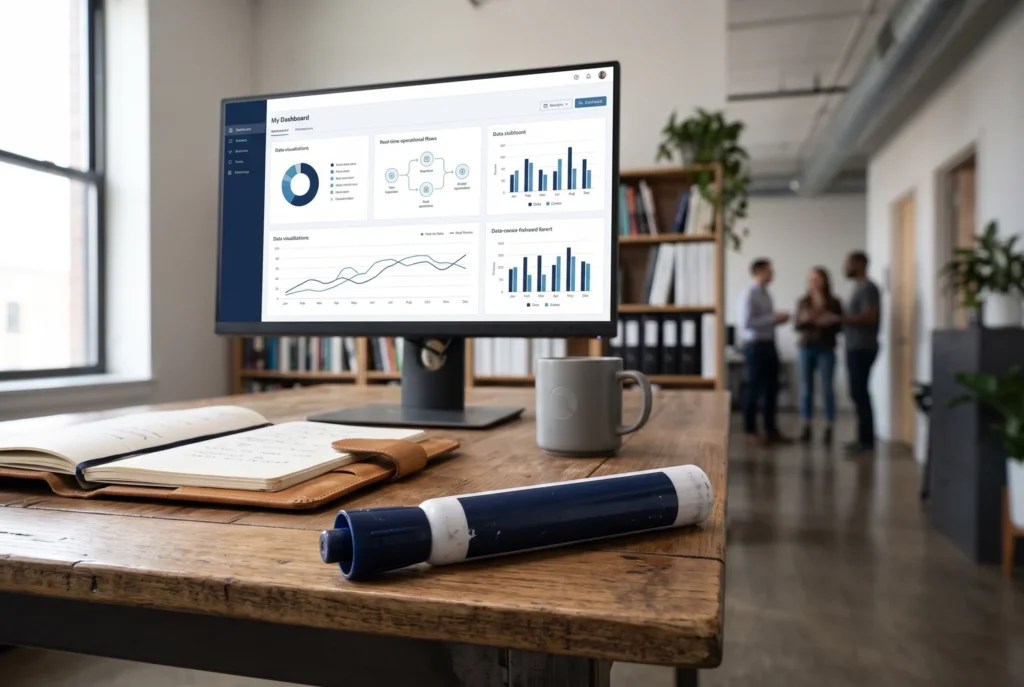
Quadrant Alpha’s inventory management system documentation points to a set of features built around one goal: keeping stock and delivery information visible across locations instead of siloed by branch or team.
Multi-location centralization lets a business manage a central warehouse or commissary alongside multiple branches from a single system, rather than each site keeping its own separate records. Operations teams can still view, sort, or filter data by warehouse, but the configuration and oversight stay centralized.
Unified stock monitoring ties into this by giving one consolidated view of inventory across all locations, which can cut down on the manual reconciliation work that happens when each branch reports numbers separately.
Branch replenishment support means stock can move from a central commissary out to individual branches within the same system, which helps address stockout risk at the branch level without a separate manual restocking process.
Quadrant Alpha’s purchasing and warehouse system pages also list four additional capabilities tied to delivery and approval tracking: a delivery status overview, a multi-level approval scheme for purchasing and stock movement decisions, real-time stock monitoring after delivery, and delivery history tracking. The source pages name these as features of the system without detailing the exact workflow behind each one, so it’s worth treating them as documented capabilities rather than fully specified processes.
One feature commonly expected in a logistics platform, truck and driver management, isn’t documented on Quadrant Alpha’s current product pages. Businesses evaluating the LMS for fleet-specific tracking should confirm that scope directly with Quadrant Alpha rather than assume it’s included.
Connecting the stages instead of patching each one separately
Individually, each LMS feature solves a narrow problem. Together, they change how information moves between procurement, warehousing, transport, and delivery.
Purchasing decisions feed directly into warehouse receiving, so a purchase order raised by procurement doesn’t need a separate phone call or spreadsheet update to reach the warehouse team. Multi-location centralization means stock counts from different branches or a central commissary sit in one system rather than in separate ledgers that only get reconciled at month-end. The delivery status overview and delivery history tracking give operations staff a record of where a shipment stands and where it’s been, instead of relying on drivers’ text updates or a dispatcher’s memory.
The multi-level approval scheme adds a checkpoint at each stage, so a stock movement or purchase decision doesn’t proceed without the right sign-off, which can reduce the kind of undocumented exceptions that cause discrepancies later. Real-time stock monitoring after delivery closes the loop by confirming what arrived matches what was recorded, rather than surfacing a mismatch during the next physical count.
None of this guarantees faster deliveries or lower costs. What it offers is a shared reference point: procurement, warehouse, and delivery teams working from the same data instead of reconstructing it after something has already gone wrong.
Which teams actually need this
The system fits organizations where procurement, warehousing, and delivery are handled by separate people who currently coordinate through calls, chat groups, or spreadsheets. In practice, that covers retail chains, manufacturers, food and beverage operators, distributors and traders, and government suppliers moving goods across multiple sites or branches.
Within those organizations, the people most likely to feel the difference are operations managers who need a single view of what’s moving where, logistics and warehouse managers responsible for receiving and dispatch accuracy, and procurement or purchasing staff coordinating supplier orders against warehouse capacity. Inventory staff who reconcile stock counts also sit in this group, since discrepancies often trace back to gaps between what procurement ordered and what warehousing recorded.
Business owners and senior decision-makers are the other audience, particularly those weighing whether to keep patching individual tools or move to one system that ties purchasing, stock, and delivery data together. For a business running two or three branches with a shared fleet, the case for centralization is more concrete than for a single-site operation with one delivery route.
Book a walkthrough of the system
The features described here, truck and driver management, multi-location centralization, delivery status tracking, multi-level approvals, and post-delivery stock monitoring, are easier to judge on a live screen than on a page. Quadrant Alpha runs demo sessions where your own procurement, warehousing, or delivery scenarios can be walked through directly.
To set one up, submit a request through the demo page, call the Makati office at +632 8813-7616, or email [email protected]. Quadrant Alpha Technology Solutions, Inc. is based at the 10th Floor, Legaspi Suites, 178 Salcedo Street, Legaspi Village, Makati City 1229, Philippines.
If your teams are still tracking deliveries across group chats and spreadsheets, a short demo is a low-cost way to see whether a single system changes that.