



The real cost of running production on spreadsheets
A manufacturer with plants or warehouses in Cavite, Cebu, and Davao often has three different pictures of the same raw material stock, updated at three different speeds. One site logs receipts on paper, another on a shared spreadsheet, and by the time anyone reconciles the numbers, production has already stalled waiting for a component that was actually sitting in a different warehouse the whole time.
This is the day-to-day reality for a lot of Philippine manufacturers. Materials and finished goods spread across multiple warehouses or islands make it harder to know what you actually have and where, and manual, spreadsheet-based processes tend to produce counting errors, delayed fulfillment, and inconsistent tracking across locations. Add unpredictable demand, disrupted transport, and unreliable replenishment, and stockouts start delaying production runs rather than just annoying a sales team. Weak movement controls make it worse: without a clear log of what moved where and when, pilferage and delivery discrepancies become harder to catch.
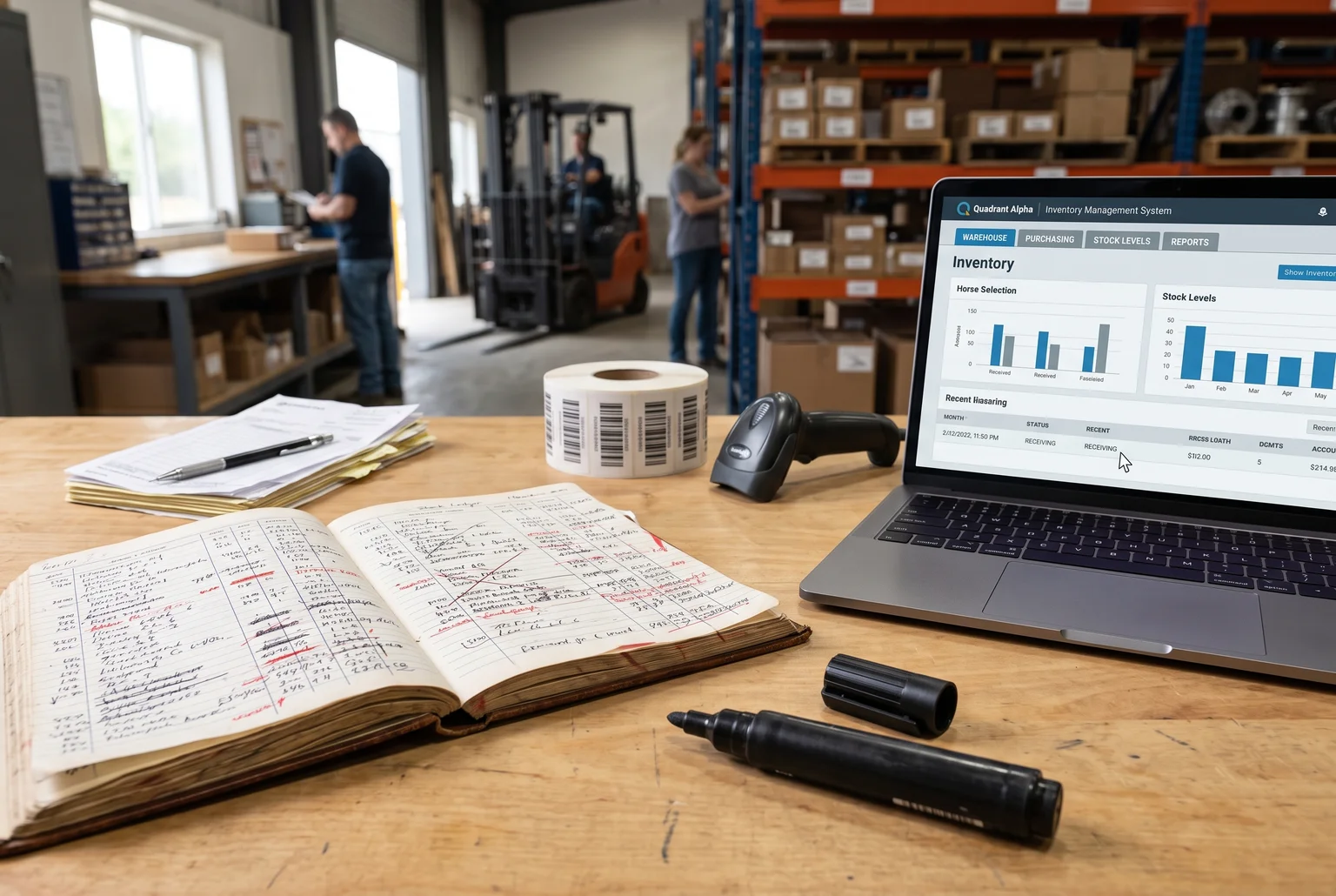
This guide skips the theory. It’s a practical look at what to check for in manufacturing inventory and purchasing software, and where a system like Quadrant Alpha’s Inventory Management System, paired with its Purchasing Management System, actually closes these gaps for PH-based operations.
Six things worth checking before you sign anything
Not every inventory system built for retail can handle a manufacturing floor with raw materials, work-in-process, and finished goods moving through the same warehouse. Before evaluating vendors, check the software against these criteria:
- Visibility by warehouse and bin, not just by item. You need to know what’s available, reserved, in transit, or committed at each specific location, not a single company-wide total that hides which branch actually has stock.
- Barcode or QR scanning across the full workflow. Receiving, put-away, picking, production issues, finished-goods receipt, and cycle counts should all run through scanning, not manual tally sheets.
- Receiving tied to purchase orders. Barcode-enabled receiving should validate SKU and quantity against the original PO before anything is accepted into stock, creating a record you can audit later.
- Lot, serial, expiry, and inspection tracking. For food, pharma, or any material with shelf life, receiving needs to capture this data at the point of entry, not after the fact.
- Configurable reorder points by location. A single company-wide threshold doesn’t work when Cebu depletes stock three times faster than Davao.
- Supplier data linked to purchasing. Pricing, lead times, and purchase history should feed directly into replenishment decisions instead of living in a separate file someone checks manually.
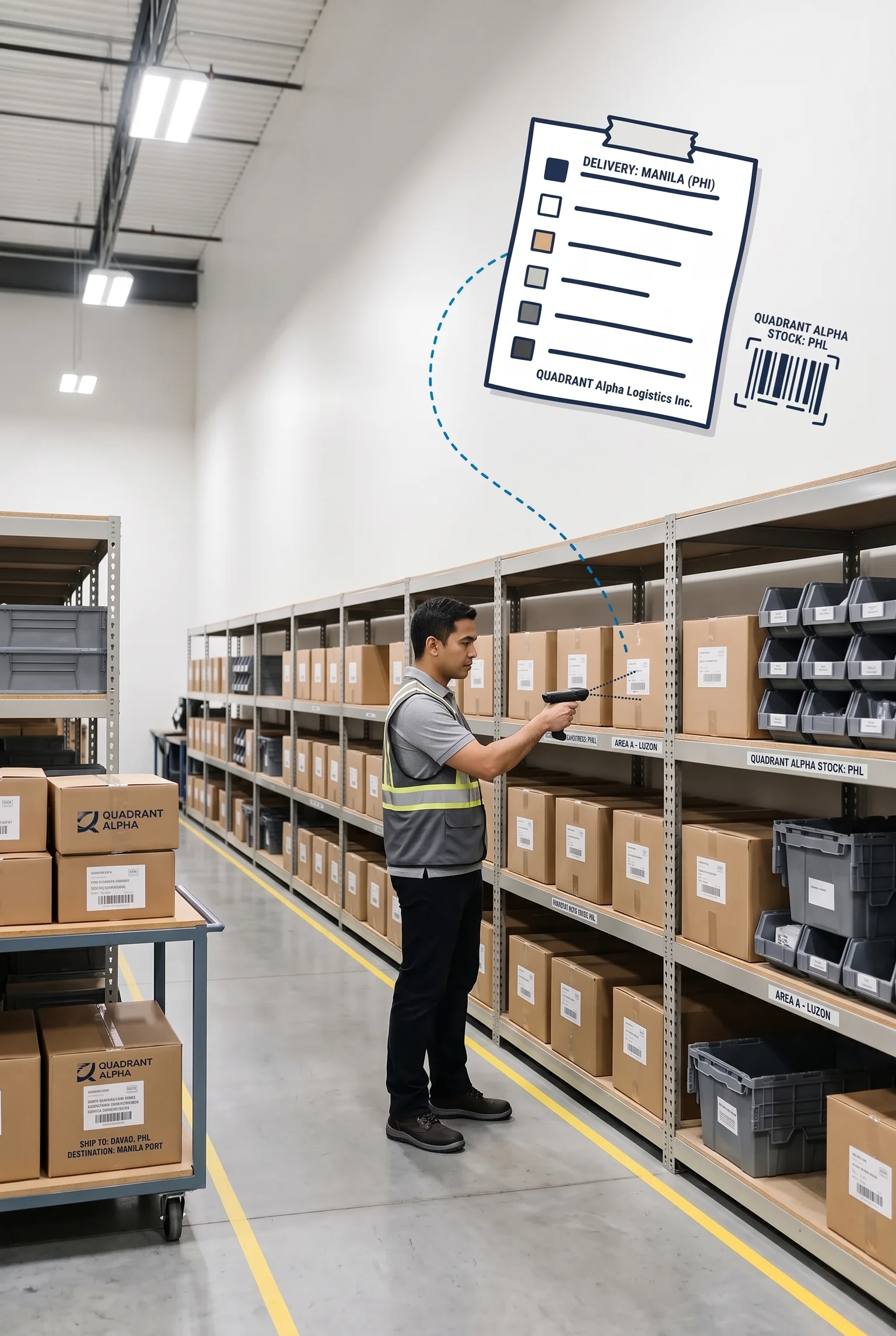
One 2026 case study on warehouse barcode adoption found that combining scanning, cycle counting, and multi-step receiving pushed inventory accuracy to 97-99%, cutting discrepancies that had been running at 8-12% down to under 2%. That’s the range worth aiming for when comparing what a vendor promises against what they can actually show you.
Mapping the checklist to the Inventory Management System
Quadrant Alpha’s Inventory Management System is built around the same gaps that trip up most manufacturing floors: unreliable receiving, no cross-location visibility, and replenishment decisions made by gut feel.
Multi-warehouse visibility. The system tracks stock across multiple warehouses or plant locations from one dashboard, so a raw-material shortage at a Cavite plant shows up before it stalls production, instead of surfacing only after a supervisor calls around asking who has extra stock. For manufacturers running a central warehouse or commissary that distributes materials and finished goods to branch plants, that consolidated view replaces the spreadsheet-and-phone-call routine most PH operations still rely on.
Barcode-based receiving and delivery. Scanning at the point of entry ties incoming raw material batches to what was ordered, catching quantity or SKU mismatches before they get logged as accepted stock.
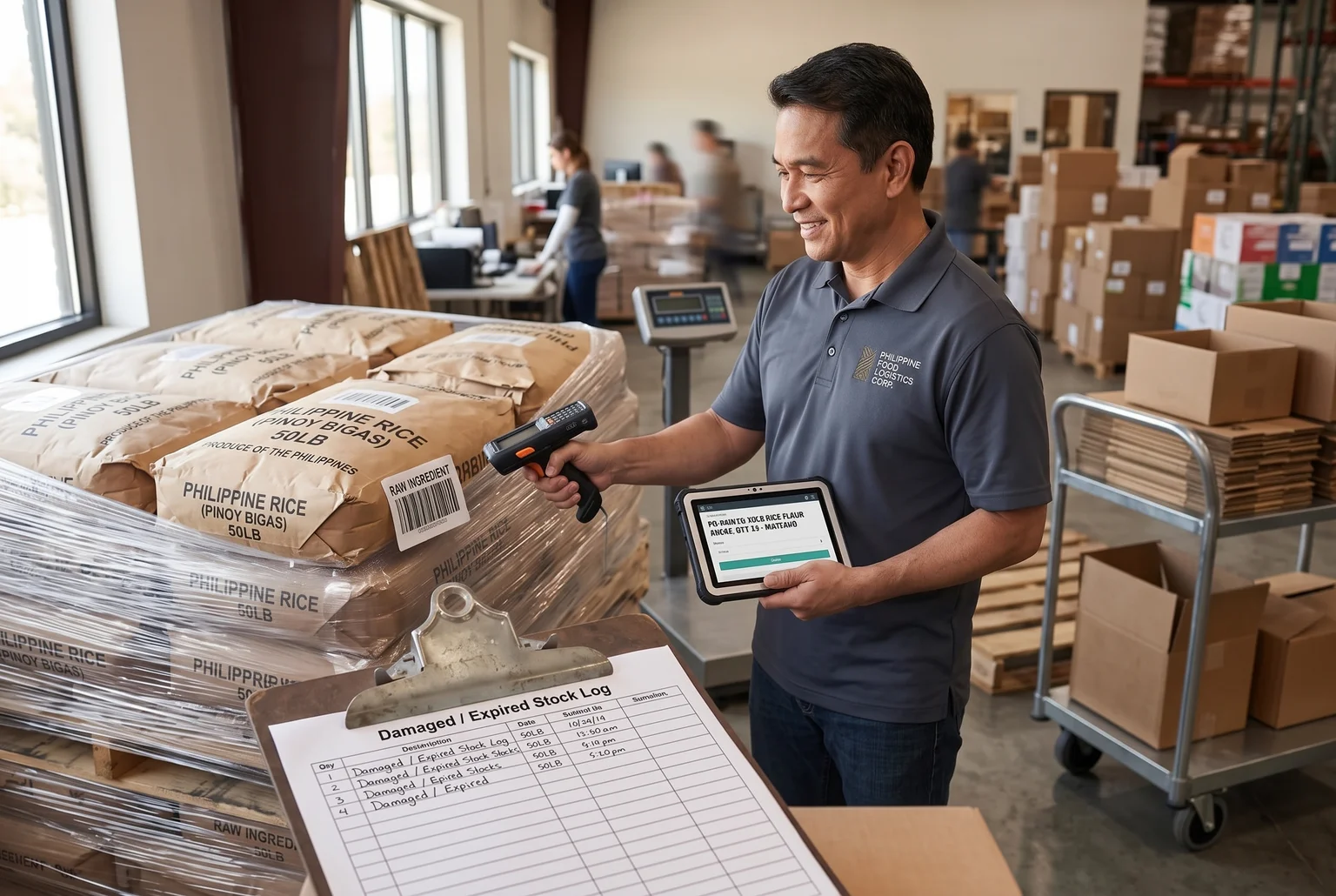
Exception tracking for damaged, spoiled, and expired stock. Materials that fail inspection or expire get flagged and tracked separately from usable inventory, which matters for food, pharma, and any manufacturer working with shelf-life-sensitive inputs.
SKU- and warehouse-level thresholds. Reorder points can be set per SKU and per location, so a plant that burns through resin or packaging faster than another doesn’t wait for a company-wide average to trigger replenishment.
Supplier-price management. Pricing and supplier data sit inside the system rather than a separate file, feeding directly into purchasing decisions.
Centralized, barcode-verified records also reduce the blind spots that let inventory quietly walk out the door, though no system eliminates pilferage on its own; it depends on how consistently receiving and counts are enforced on the floor. One client’s feedback noted the module took time to get used to, which is worth factoring into rollout planning rather than expecting instant fluency from warehouse staff.
Closing the loop with purchasing
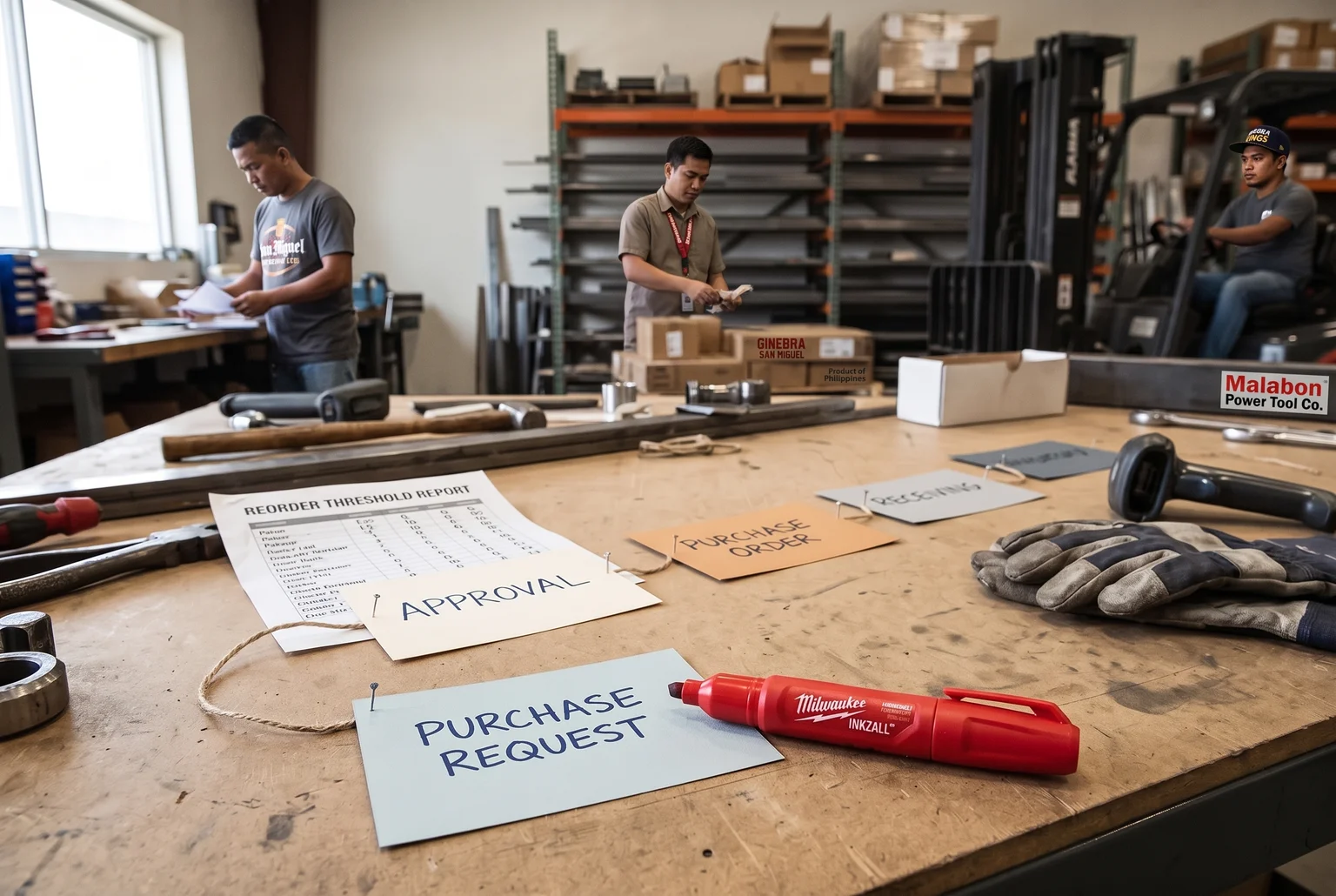
Good inventory tracking still leaves a gap: someone has to decide what to reorder, who to buy it from, and at what price, before any of it reaches the warehouse floor. That’s the job of Quadrant Alpha’s Purchasing Management System, built to work alongside the Inventory Management System rather than replace it.
The PMS keeps supplier records, including contact details and pricing, tied directly to purchase requests and transactions, so a plant manager comparing two resin suppliers isn’t digging through email threads or a separate spreadsheet. Purchase requests move through approval workflows, and anyone can check where a request sits in that chain instead of asking a purchasing officer for a status update.
Once an order is approved, the system tracks the purchase order issued to the supplier and monitors it through to receiving. That receiving record then connects to purchasing costs and accounts payable, giving a manufacturer visibility into what was requested, what actually arrived, what it cost, and what’s still owed, without re-entering the same data across three departments.
For raw-material-heavy operations, that link between purchasing and inventory is what turns a reorder threshold into an actual purchase order, rather than a flag that sits unactioned until someone notices the shelf is empty.
Why Philippine supply chains make this harder to ignore
Retail chains, manufacturers, food and beverage distributors, and government offices all tend to manage inventory across multiple sites in the Philippines, not one central plant with a single stockroom. A feed manufacturer might run a main facility plus satellite warehouses near key farms. A food distributor might hold cold storage in one city and dry goods in another. Each site needs its own visibility, and someone still has to see all of it at once.
Weather adds another layer that’s hard to plan around. In November 2024, typhoons and flooding caused port congestion and delayed the delivery of pre-production materials, producing the fastest lengthening of average manufacturing lead times in over three years, according to reporting on that period’s factory data. A raw material shipment that used to take ten days can suddenly take three weeks, and a manufacturer without clear visibility into current stock levels across branches has no way to tell which site can absorb the delay and which one is about to stall production.
Warehouse demand in the country reflects this pressure too: logistics companies accounted for 53% of Philippine warehouse demand in the first half of 2024, with manufacturers at 21%, based on industry tracking. Manufacturers are competing for storage capacity in a market where logistics firms dominate demand, which makes tighter control over what’s already on hand, and what’s on order, a more immediate concern than it would be in a market with slack capacity to spare.

How sales and delivery systems connect without taking over
Inventory and purchasing don’t run in isolation. Once finished goods are ready to move, a Billing and Sales Management System records the invoice, payment, and sales transaction, connecting that commercial activity back to stock checking and release. On the outbound side, a Logistics Management System tracks deliveries and receipts of goods, updating stock figures as products actually leave or arrive so warehouse and sales teams are working from the same numbers.
For a manufacturer, these are adjacent controls, not substitutes for the systems doing the heavier work of tracking raw materials and production stock. Sales and logistics tell you what left the building and to whom. Inventory and purchasing tell you what you have, what’s coming, and what to reorder before a shortage stalls a production run.
See the Inventory and Purchasing Management Systems for your own operation
Reading about multi-warehouse tracking, barcode receiving, and supplier pricing is one thing. Watching how the Inventory Management System and Purchasing Management System work together on a live dashboard, from purchase request to receiving, is a better way to judge if it fits your production floor.
You can request a demo directly with Quadrant Alpha’s team, walk through your own stockroom or multi-branch setup, and ask how SKU thresholds, damage tracking, or supplier approvals would apply to your materials specifically. Reach them by phone at +632 8813-7616, by email, or through the request form on their site, or visit their office at 10th Floor, Legaspi Suites, 178 Salcedo Street, Legaspi Village, Makati City.