


What weak inventory tracking costs Philippine businesses
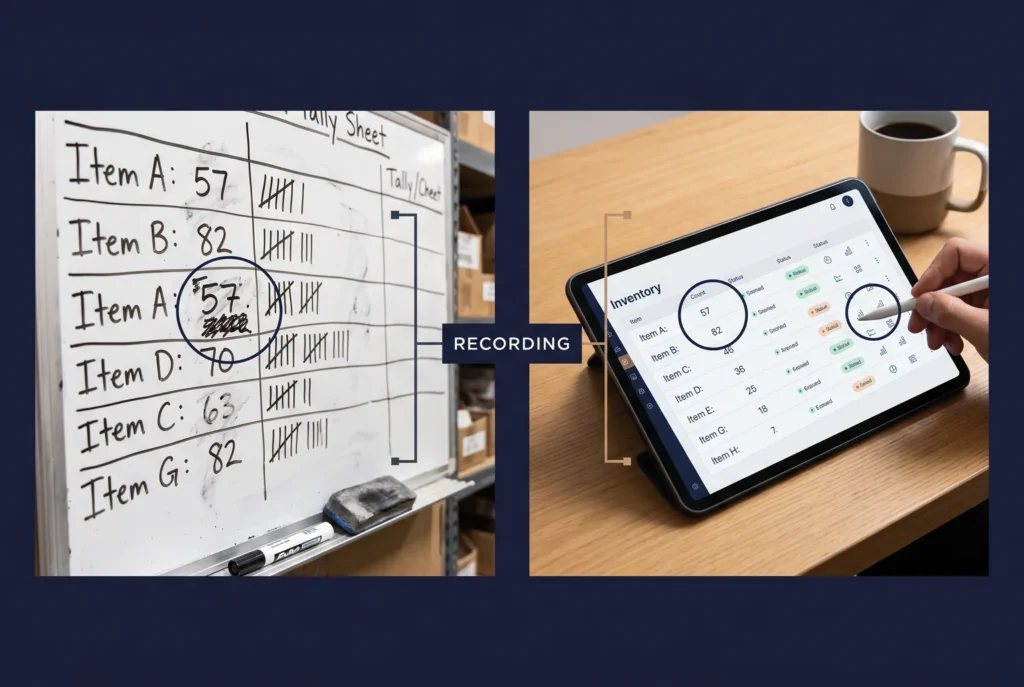
Retail, food-and-beverage, and distribution businesses in the Philippines commonly run inventory through spreadsheets, whiteboards, or plain visual shelf checks. That approach creates predictable damage: stockouts on fast-moving items that cost sales and customer loyalty, expired or spoiled stock that pharmacies and food businesses write off as dead loss, and shrinkage that’s hard to trace back to theft, miscounts, or bad handling when there’s no regular reconciliation process. Research on Philippine MSMEs also links stronger inventory controls with better financial performance and sustainability, which suggests the reverse is also true: weak controls tend to show up on the bottom line.
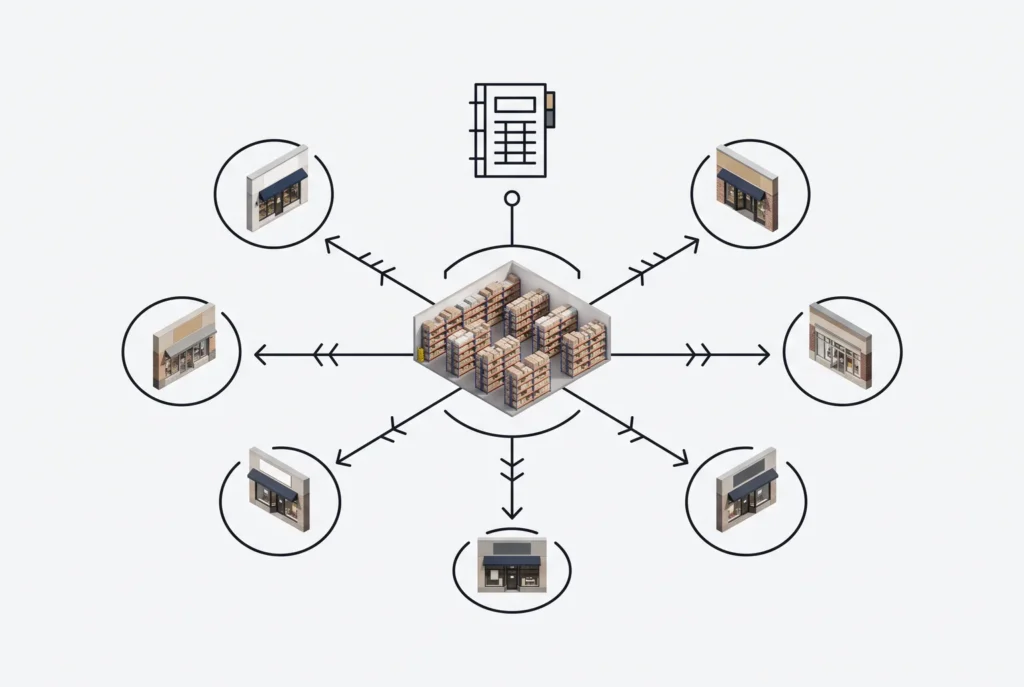
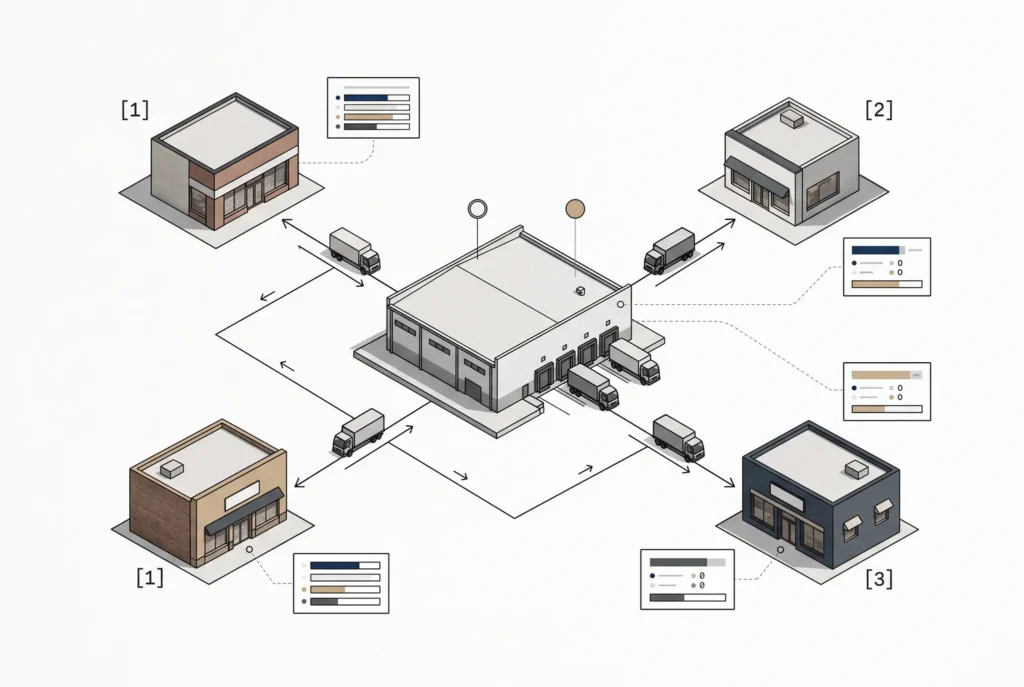
The stakes are higher for businesses running multiple locations. Large Philippine food chains like Chowking process products centrally and distribute them to branches for final preparation, a commissary-to-branch model that depends on knowing exactly what’s in the central warehouse and what each branch needs, in real time.
This guide walks through what a modern inventory management system should actually do, why the Philippine operating context adds requirements that generic tools may miss, and how the major providers serving PH businesses compare.
What to look for before you buy
Before comparing providers, it helps to know what a good inventory management system actually needs to do. Treat this as a checklist to hold up against any product you’re evaluating.
Real-time visibility across every location. The system should show, at any given moment, what’s on hand in each warehouse, branch, or store, not what was there when someone last updated a spreadsheet. This includes distinguishing stock that’s on-hand, reserved for an order, or in transit between locations, so nobody double-promises the same item to two customers.
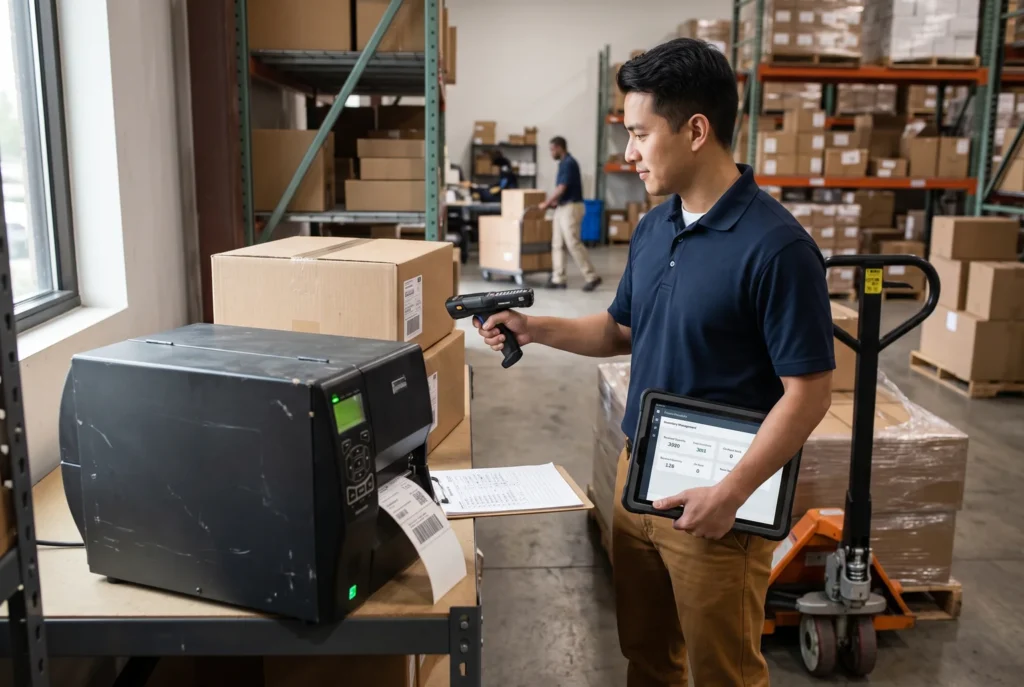
Barcode-enabled receiving and delivery. Scanning items in and out at each transaction point cuts manual data-entry errors and speeds up the receiving process. Barcode-based tracking generally moves inventory accuracy from the 80–90% range typical of manual processes up to 98–99%+, and it lets staff catch shortages, overages, or wrong shipments at the point of receiving rather than weeks later during a count.
Separate tracking for damaged, spoiled, and expired stock. Rather than deleting or quietly writing off bad stock, a proper system moves it to a distinct status or location so it stays visible and auditable while being excluded from what’s available to sell.
Pilferage controls. This means routine cycle counts with defined variance tolerances, not just an annual physical count, so any shrinkage gets flagged and investigated close to when it happens rather than months later.
Per-SKU, per-location reorder thresholds. Every product should have its own minimum stock level, and that threshold should be able to differ by warehouse or branch, since a flagship store and a small satellite branch don’t sell at the same pace.
Supplier price management. The system should track what each supplier charges per item over time, so purchasing decisions and cost reporting are based on current numbers rather than outdated price sheets.
These aren’t exotic features. They’re the baseline for any business running more than one location or handling stock that can spoil, break, or walk off the shelf.
What the Philippines adds to the checklist
A generic inventory tool built for a single warehouse in another country misses two things that matter here.
The first is distribution structure. Many Philippine food and retail chains run on a centralized commissary or warehouse model, producing or bulk-purchasing at one site and distributing to branches, a pattern visible in how Jollibee Group has expanded its commissary network in Cebu and Danao and how Max’s Group added a multi-capacity commissary and distribution center. An IMS needs to handle stock moving from one hub outward to many branches, not just track separate locations independently.
The second is compliance. Businesses selling goods are required under Revenue Regulation No. 5-94 to keep a book of inventories showing quantity, description, unit cost, and total cost, with an opening inventory filed within 10 days of starting operations and later inventories filed within 30 days of the accounting period’s close. An IMS that can’t produce item-level, audit-ready reports on demand leaves that filing work manual.
Local support closes the gap between these requirements and daily use. Philippine MSMEs often struggle with cost, technical skills, and access to timely help, and vendors operating in the same time zone can resolve issues within the same business day rather than after a delay.
Where PH businesses usually start looking
Most Philippine business owners researching inventory software run into the same handful of names, and each one is built around a different kind of business.
Odoo Inventory is a warehouse and stock module inside the larger Odoo ERP suite, so it sits alongside Sales, Purchase, Accounting, and Manufacturing apps. It supports multi-site warehouse organization and logistics workflows like replenishment and cross-docking, which makes it a reasonable fit for businesses that want inventory tied directly into accounting and procurement in one system. The tradeoff is that Odoo’s flexibility comes with ERP-level setup, and the platform itself isn’t built with Philippine tax filing in mind.
Zoho Inventory is priced for small and growing businesses, with a free tier and a Standard plan around $29 a month scaling up toward enterprise pricing. It’s a sensible entry point for a business that mainly needs core stock tracking without a big upfront cost, though it’s a global product with no PH-specific compliance features built in.
inFlow Inventory has built its reputation on being easy to use. Reviewers consistently describe it as approachable for small product businesses transitioning off spreadsheets, with a clean interface that doesn’t require much technical background to run. It scales from solo operators to teams of about 50, which suits a single-location retailer more than a multi-branch chain.
Cin7 Core rounds out the list, marketed toward small and mid-sized manufacturers, retailers, and wholesalers, with integrations across more than 700 applications for syncing orders and financial data across e-commerce and accounting platforms.
Each of these tools is well documented and widely used. The question for a Philippine business is whether they were built with local operating patterns in mind.
How the local support gap plays out in practice
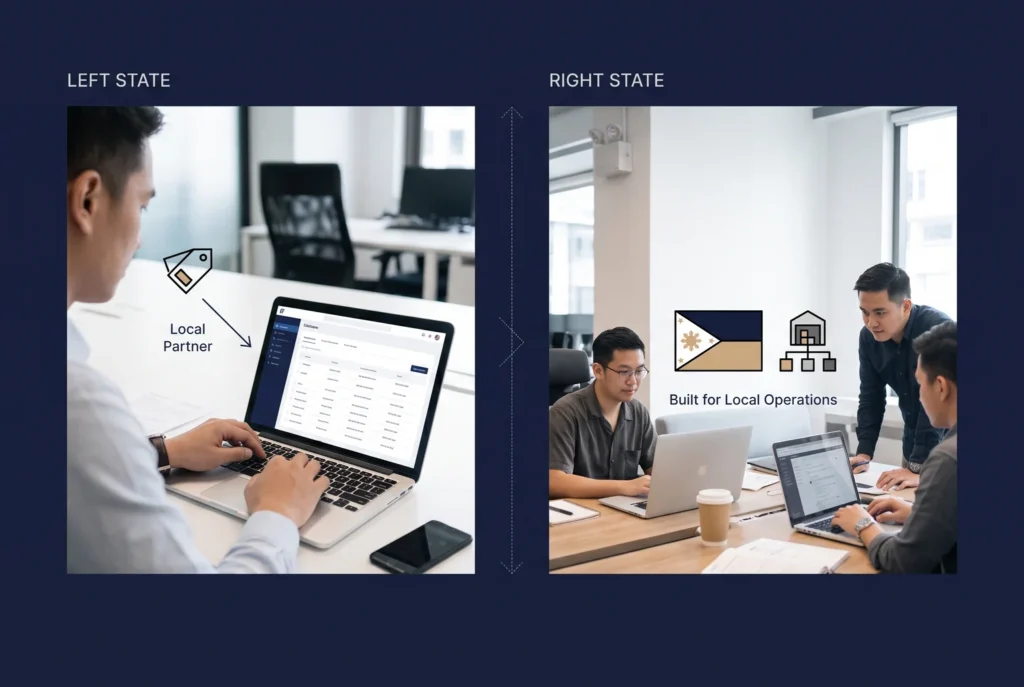
Odoo and Zoho both have real Philippine partner networks. Odoo lists 39 verified partners in the country, split across Gold, Silver, and Ready tiers, including firms like Toolkit Inc. in Pasig and Malaya Tech Consulting, named Odoo’s top Philippine partner for 2025. Zoho has similar coverage through partners like EMI Solutions Philippines, which handles implementation, migration, and ongoing support for Zoho’s ecosystem. inFlow’s documented support runs through a centralized app and email channel rather than a local partner bench, and no source in this research documents a Philippine-based Cin7 partner network, which is worth noting rather than treating as proof one doesn’t exist.
Partner access solves part of the problem: someone local to call when setup gets complicated. It doesn’t change what the underlying software was built to do. Odoo and Zoho partners can configure multi-warehouse settings and connect accounting modules, but they’re customizing a global platform, not building around a commissary-to-branch distribution model or BIR inventory list formats from scratch. A 2024 study on SMB software buying found businesses want self-serve simplicity but still expect support for anything complex, and multi-branch inventory with local compliance requirements tends to fall in that complex category.
The clearest fit: businesses running a central kitchen or warehouse model
Quadrant Alpha’s Inventory Management System (IMS) is built around the operating model common to Philippine food and retail chains: one commissary or warehouse supplying multiple branches. The system handles centralized stock control, multi-warehouse tracking, and barcode receiving and delivery as core functions rather than add-ons configured after the fact.
That focus matters for a specific kind of buyer: a business with a central hub distributing to several branches, needing per-SKU thresholds at each location and a clear view of what’s moving where. For that buyer, a platform designed around the distribution pattern from the start has less setup friction than adapting a general-purpose tool to fit it.
Quadrant Alpha also positions itself around tailored builds and direct, ongoing collaboration with clients rather than fixed packages, according to its own materials. That’s a reasonable fit for businesses whose branch structure, product mix, or compliance needs don’t map cleanly onto an off-the-shelf template.
Matching the tool to how your business actually runs
Start with your operating model, not the feature list. If you run one commissary or warehouse feeding several branches, weigh providers on how well they handle that structure by default, plus BIR-ready reporting and local support response times. If you’re a single-location retailer, a general tool like Zoho or inFlow may cover what you need without customization.
For businesses built around the commissary-to-branch model, Quadrant Alpha’s IMS is worth a direct conversation. You can request a demo or consultation by phone at +632 8813-7616, or by emailing [email protected].