


Why a ranked shortlist won’t tell you who to hire
You have five software development companies on a shortlist. All five show star ratings, a portfolio page and a confident claim about custom work. You have no reliable way to tell which one will build what you need.
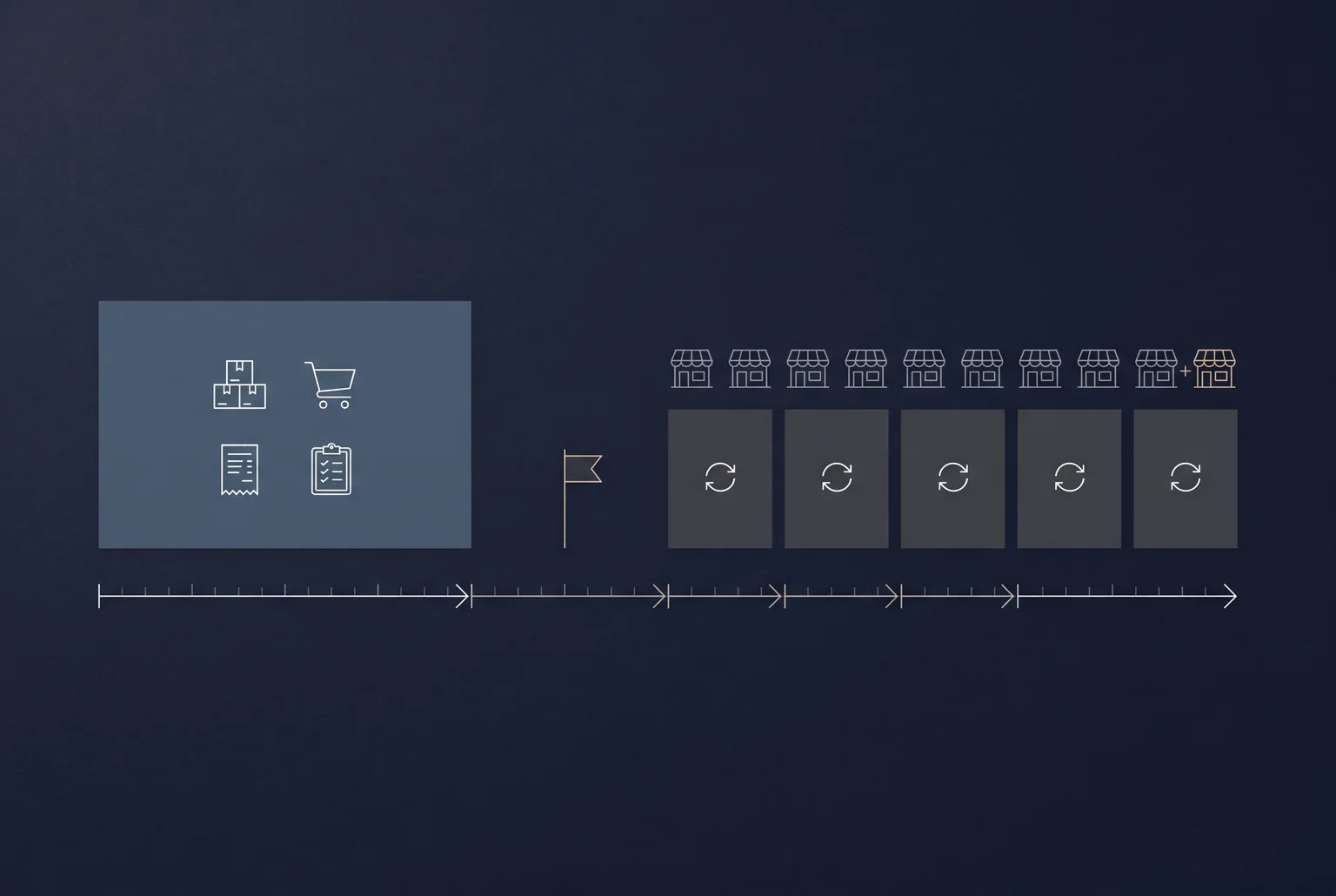
Take a mid-sized Philippine retailer with 12 branches. Stock and purchasing live in spreadsheets, one per branch, merged by hand. Head office learns what sold only after someone sends the file. The owner wants a custom inventory, purchasing and sales system. This retailer is the example for the rest of this post.
The problem is common. McKinsey notes that many Southeast Asian grocery retailers run disconnected legacy systems for point-of-sale and stock management, which produces inventory mismatches and stock-outs. Cellboy, a Philippine gadget retailer, found that manual procedures only updated transaction data after processing, which blocked real-time visibility across more than 200 stores.
So our retailer goes to a directory. Directories help, but they have limits. Clutch says its rankings combine verified client feedback, company experience and market presence, and it calls them a signal for comparing providers, not a definitive buying decision. Sponsored listings can also appear above organic ones in the default order, though sponsorship does not change the underlying score. A high position does not mean the firm fits a 12-branch retail build.
Review checks are real but partial. Clutch assesses every review manually, and a review is marked Verified only when the reviewer’s identity and company affiliation are confirmed. GoodFirms ranks firms on two axes, Core Competencies and a 360-Performance View, and its methodology page does not give a reproducible weighting for each factor. A score tells you someone was satisfied. It does not tell you whether that firm has built purchase approvals across branches.
Rankings are a good way to build a longlist. They are a poor way to pick a winner.
The rest of this post is a step-by-step vetting framework. It covers setting criteria, checking expertise, running discovery calls, understanding costs, doing legal checks and securing post-launch support. Each step uses the same retailer, so you can see how a decision gets made. For a related look at systems that replace spreadsheets and phone calls, see this guide to logistics management software in the Philippines.
What Philippine developers offer and where location matters
The Philippine software and services sector is large. IBPAP projects IT-BPM revenue of US$45.3 billion and 1.99 million FTEs in 2027. The 2028 outlook now comes in two scenarios, a downside case of US$43.3 billion and 1.85 million FTEs and an accelerated case of US$50.5 billion and 2.14 million FTEs. Both sit below the 2022 roadmap’s US$59 billion and 2.5 million jobs, which IBPAP revised downward after a roadmap review. For a buyer, the size means a deep pool of firms and people, and the revision means the industry is still being shaped by a shift toward higher-skilled work.
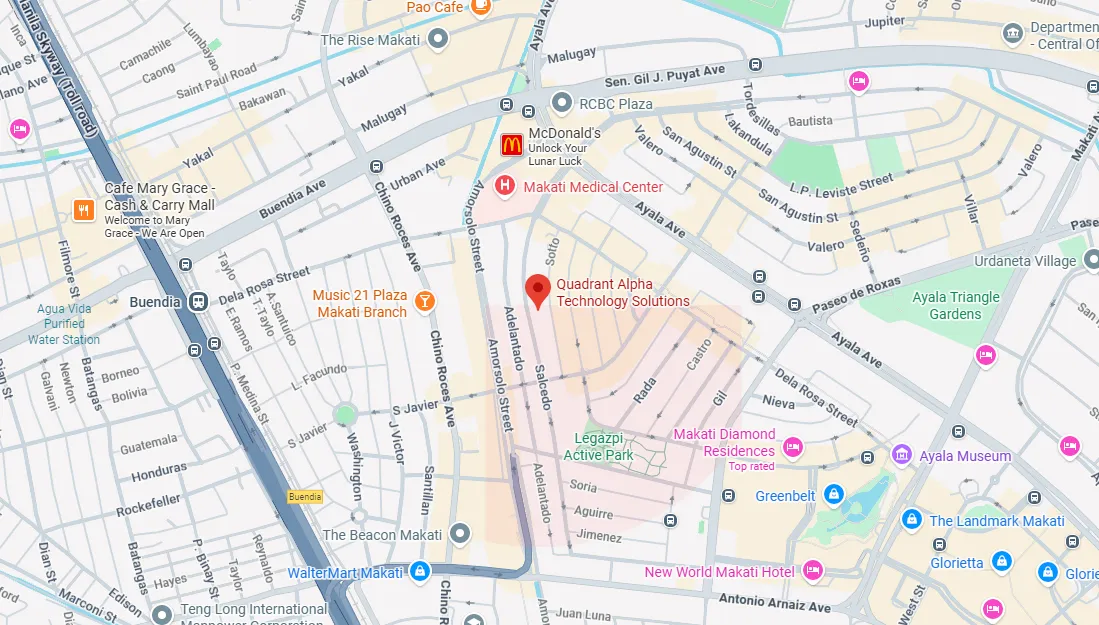
Metro Manila is a major base for Philippine IT-BPM firms. Metro Cebu and Davao City are also established IT-BPM centers. Within Metro Manila, Ortigas Center in Pasig and Mandaluyong has PEZA-accredited IT buildings such as Robinsons Cybergate and Eton Centris. Makati and Quezon City are also major bases, though claims that one city specialises in custom software should be checked against individual firms’ experience. Verify it against a firm’s actual project list.
Cost and language are the usual selling points. Third-party guides put the Philippines broadly in line with India and Vietnam for junior-to-mid-level work, with Malaysia pricier. Those guides mostly report salaries or contractor pay, and an agency’s bill rate adds overhead, management and margin, so compare like with like. The English and time-zone advantages matter most for overseas buyers. A Philippine retailer gets neither as a differentiator.
Location counts for less than most directories imply. For our 12-branch retailer, a Cebu firm and a Metro Manila firm can both do the work. What separates them is engineering depth, delivery controls, security and communication, along with experience in retail stock and purchasing. Location earns weight in two cases: when your team needs to sit with branch staff during rollout, and when you want a vendor within a short drive of head office for workshops. If the head office is in Metro Manila and most branches are in the Visayas, a Cebu partner could be the more practical choice for site visits. Otherwise, score the firm, not the city.
Step 1: Write your criteria and weights before contacting anyone
Before any vendor call, write down the business problem, the scope, a budget range and a deadline. For the 12-branch retailer, that reads: replace branch spreadsheets with one system for purchasing, stock movement and sales, with a physical count process per branch, live in four months. Add what you expect to need later, such as an online channel, and mention any earlier software effort that fell short. Our buyer guidance suggests sharing both, along with examples of software whose layout you like.
The effort pays off in avoided rework. PMI found that 47% of unsuccessful projects miss their goals because of inaccurate requirements management. A McKinsey and Oxford study reports large IT projects average 45% over budget and deliver 56% less value than predicted.
Next, turn those risks into a weighted scorecard. Weights total 100%, each vendor is rated 1 to 5 per criterion, and the weighted score is rating times weight, summed. Guides suggest 25 to 40% for functional fit on mission-critical systems. Here is the retailer’s version:
- Technical fit (30%): can they model branch-level stock, purchase approvals and sales in one system?
- Industry experience (20%): have they built inventory or sales systems for multi-branch retail?
- Communication (15%): clear answers, a named contact, a regular update schedule.
- Security (15%): access control by branch role, backups, handling of supplier and customer data.
- Cost (10%): a transparent estimate that separates build, hosting and change requests.
- Support (10%): bug-fix period, response times, staff training.
Set pass/fail gates too. For this retailer, a vendor that cannot explain how it protects personal data is out, whatever its total score. Each score needs evidence behind it, such as a demo, a reference call or a sample plan, not an impression.
This is what protects you from a polished deck. A slick presentation can lift a vendor’s mood in the room, but it earns points only where it answers a criterion you wrote down earlier. A vendor who scores 5 on design and 2 on retail experience will show that gap on paper.
Step 2: Read directory profiles against your scorecard
Directory listings are useful for building a shortlist and weak as proof of fit. The figures below were checked on October 30, 2026 and change as reviews come in. Clutch and GoodFirms also sort companies by different rules, so compare firms within the same category and on the same date.
|
Company |
Location |
Services and specialties |
Rating, reviews |
Directory |
|---|---|---|---|---|
|
Offshorly |
Quezon City |
Software development |
4.9, 27 |
Clutch |
|
Global BrainForce |
Makati |
Software development |
4.6, 7 |
Clutch |
|
Hireplicity |
Mandaue City |
Software development |
5.0, 10 |
Clutch |
|
Tallium Inc. |
Philippines |
Custom mobile and web apps, concept to maintenance |
5.0, 43 |
GoodFirms |
|
Kevych Solutions |
Philippines |
Software development |
5.0, 25 |
GoodFirms |
|
Startechup |
Philippines |
Software development |
5.0, 2 |
GoodFirms |
|
Blue Wolf Solutions |
Cebu |
Custom software, mobile and web, process automation, cloud, maintenance |
Not listed here |
Company site |
|
Quadrant Alpha |
Philippines |
Custom software, HRIS, inventory, warehouse systems |
4.0, 1 |
Clutch |
We publish this blog and have included Quadrant Alpha in the comparison for transparency. We serve Retail, Manufacturing, Logistics and Trading, Food and Beverage, and Government. Our Clutch profile shows 4.0 from one review, which includes HRIS work for a food-manufacturing company. Apply the same project-fit and reference checks to us as to every provider.
That is the first lesson in reading ratings. A 5.0 from two reviews, as with Startechup and Tsukiden Global Solutions on GoodFirms, carries less weight than 4.9 from 27. Clutch’s own method treats the score as a mix of overall rating, recency, verification status and project budget, so check the date and size of each review, and whether it is marked verified. A 4.6 from seven reviews that describe projects like yours can be more useful than a perfect score with no detail.
Portfolio claims need the same care. GoodFirms profiles combine ratings with capabilities the companies describe themselves, so a listed technology or service percentage is a claim to test, not a result. Separate what a firm delivers (custom software, web, mobile) from what it specialises in. StackSpace draws that line on its own site, listing custom software, web and mobile applications as delivery capabilities, and AI-powered applications, React and TypeScript as specialties.
Now apply your scorecard. For the retailer, technical fit and industry experience carry 50% of the weight. Ask each shortlisted firm for one case study with multi-branch stock, purchasing or sales work, and score that evidence, not the profile badge. A firm with strong web design reviews but no inventory project earns a low industry score, however high its rating.
What to expect to pay under each engagement model
Public price lists for Philippine vendors are thin. Clutch’s Philippine listings place many software development companies in the $25 to $49 per hour band, with some smaller firms and freelancers below $25. Those are the bands vendors choose for their listings, not a market average, and no public source gives a clean rate card split by freelancer, boutique, mid-size and large firms. At Quadrant Alpha, we provide project-specific quotes based on your requirements. The figures below were gathered in October 2026.
|
Model |
Range |
Basis |
|---|---|---|
|
Philippine vendor, hourly listing |
Under $25 to $49 per hour |
Clutch listings, October 2026 |
|
Staff augmentation, US bill rates |
$50 to $150 per hour |
TechQuarter |
|
Dedicated team of five to seven, Asia |
$10,000 to $25,000 per month |
Netguru |
|
Dedicated team of five to seven, US and Canada |
$60,000 to $120,000+ per month |
Netguru |
|
Offshore Philippine developer, full time |
$2,000 to $3,500 junior, $3,500 to $5,500 mid-level, $5,500 to $8,000 senior, per month |
Second Talent, 2026 |
The Second Talent figures may be vendor billing rates rather than salaries. For comparison, Indeed Philippines lists average developer base pay at ₱49,828 per month, with seniors at ₱61,877 as of October 15, 2026. Larger firms usually charge more because their rates carry governance, security, QA and compliance work.
Which model fits which buyer
Fixed price suits a bounded problem with a set date. It works only when requirements are stable, because changes are priced separately and vague scope leads to disputes or padded quotes. Staff augmentation gives you extra hands, but you own delivery, so it fits only if you already have technical leadership. A dedicated team suits a product with a roadmap that keeps moving.
For the 12-branch retailer, we recommend splitting the engagement. Fix the price for the core build: stock movement, purchasing, sales and branch counts, written down in detail during discovery. Then move to a monthly retainer or a small dedicated team for reporting changes, new branches and requests from branch staff. A retailer with no in-house developers should skip staff augmentation, since nobody would be there to direct the work.
Costs a quote may leave out
Read each proposal for exclusions. The ones to look for are QA, project management, infrastructure, licences, training, warranty, support, maintenance and knowledge transfer. Ask for each as a line item. Hosting and licences recur monthly. Training matters for twelve branches of staff who must learn a new system. Change requests under a fixed price are billed on top of the quote.
Software budgets for other tools carry similar line items; our HRIS pricing guide shows how they are itemised for HR software.
Discovery call questions and what good answers sound like
Keep each question short and write down the answers. Vague replies are easy to forget by the time you compare proposals.
- Your process: “What happens between discovery and development?” A good answer names requirements, user stories, technical scoping, risks, estimates and acceptance criteria before any code is written. For the retailer, ask how the vendor would handle branch-level stock counts and purchase approvals. A strong vendor asks who approves a purchase order, at what amount, and what a branch manager does when a physical count disagrees with the system.
- Your team: “Who specifically will be on our team, and who will write the code?” Ask whether work will be subcontracted or moved offshore after signing. Good answers give names, roles and experience, and explain how a replacement is handled if someone leaves.
- Method and communication: “How will we hear from you each week?” Listen for channels, meeting frequency, response times and an escalation path. “We use Agile” tells you little. A specific answer describes planning, code review, testing, demos and release, and records decisions in a shared backlog or ticketing system.
- Testing: “Who owns QA, and when does it start?” QA should have dedicated responsibility throughout delivery, not a week before launch.
- References: “Can I speak with a client whose project resembled mine?” Ask for a retailer or another multi-site business, and ask that client how the vendor behaved when something went wrong.
- Scope change: “What is included in the initial scope, and what is explicitly excluded?” Then ask how a change is handled. A good process logs the request, estimates cost and schedule impact, and gets written approval before work starts.
Warning signs in proposals and on calls
A red flag is a pattern the vendor cannot or will not fix when you ask. A fixable concern is a gap the vendor closes with evidence. Judge each one by how the vendor responds to your request.
- Vague estimates: A single lump figure with no assumptions or itemised breakdown gives you nothing to hold the vendor to later.
- No discovery phase: A vendor that quotes a fixed price for a 12-branch inventory system without studying your stock counts and approvals is guessing.
- Unwillingness to share references: Unreachable or unverifiable references are a warning sign.
- Senior sales, junior builders: If the people on the call are not named in a staffing schedule, assume they will not write your code.
- No testing plan: Ask for a testing matrix, not a promise to “test thoroughly.”
- Reluctance to hand over source code: Resistance to repository access, credentials, documentation or IP-assignment terms is a material control risk. Repository access alone may not transfer copyright, so the contract has to say who owns what.
- Pressure to sign quickly: A discount that expires on Friday usually means the vendor wants to cut your comparison short.
A concern is likely fixable if the vendor can supply named staff, an itemised estimate, test evidence, references and sensible ownership and exit terms. A vendor that deflects the request has answered the question. Refusing verification, hiding the delivery team or withholding repository control is a reason to walk away.
To verify references, call them yourself. Ask for a project similar to yours, then ask what went wrong, who actually did the work, and what support looked like after launch.
Skipping these checks has a documented cost. The State of Hawaii recovered $31 million from a vendor over a failed Oracle ERP project, after paying that vendor $7 million.
Contract terms and data privacy checks before you sign
This is general information, not legal advice. Have a lawyer review the contract before you sign.
Start with ownership. Under the Intellectual Property Code, the person who commissions a work owns the patent unless the contract provides otherwise. Write the assignment of source code and documentation into the contract. Add confidentiality terms, and SLA remedies such as service credits instead of “as soon as possible”. Define termination and handover too: what the vendor returns, in what form, and by when.
The retailer holds customer and supplier data, so RA 10173 applies. If the vendor processes that data, a contract must govern the processing. It should state scope, data types, confidentiality for staff, security measures and limits on subprocessors. You stay responsible for safeguards even when the processor is overseas.
Registration under NPC Circular 2022-04 applies to those who process sensitive personal information of at least 1,000 individuals. Smaller entities are not automatically exempt. List every system holding personal data, including CCTV, payroll and e-commerce, to see where you stand.
Ask the vendor about access control, backups, hosting location, incident cooperation, data return or deletion, and audit rights. A SOC 2 report is an independent CPA examination of security controls. Ask whether the vendor has one.
What to secure for support after launch
Before signing, get five things in writing. The first is a warranty period. Custom-software warranties often run roughly 30 to 90 days after acceptance, and the contract should separate defects against approved requirements, which are fixed free, from enhancements, which are priced. The second is a support schedule with severity levels, coverage hours, when the response clock starts and who to escalate to. Microsoft’s tiers give a sense of scale: 1 hour for a critical outage, 4 hours for minor issues. Those are initial responses, not fixes. The third is training. The fourth is a handover package of source code, credentials, configuration documents and open issues. The fifth is an exit path.
For the 12-branch retailer, training decides whether branch staff actually use the system. Reporting changes will keep coming after launch, so price them as a separate maintenance line.
Our client feedback shows why training and support matter. A leather repair specialist called our sales and inventory system “easy to use by our staff” and cited “good client service and fast response to our concerns.” A manufacturer reported 30% faster HR processing after adopting our QWORK HRIS.
The framework runs in order: set criteria, compare firms, run the discovery call, check red flags, review the contract, secure support. To talk through your own shortlist or see a demo, contact our team at Quadrant Alpha.